There is a well-known phrase in IT: “Garbage In, Garbage Out“. If the input data is wrong, the output will be wrong too.
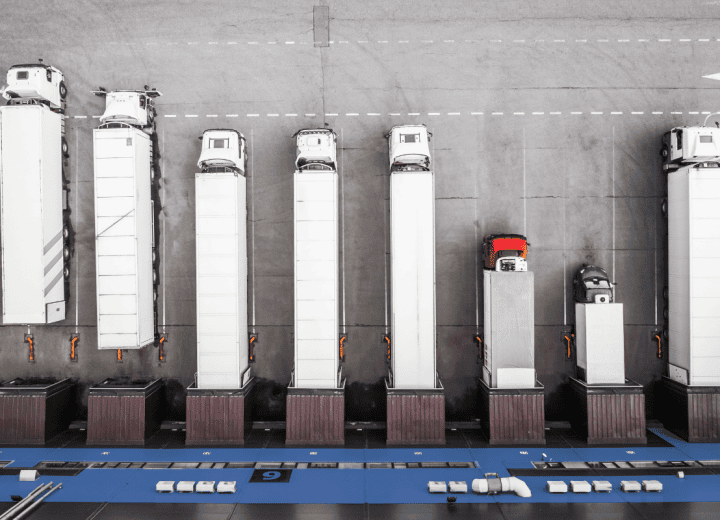
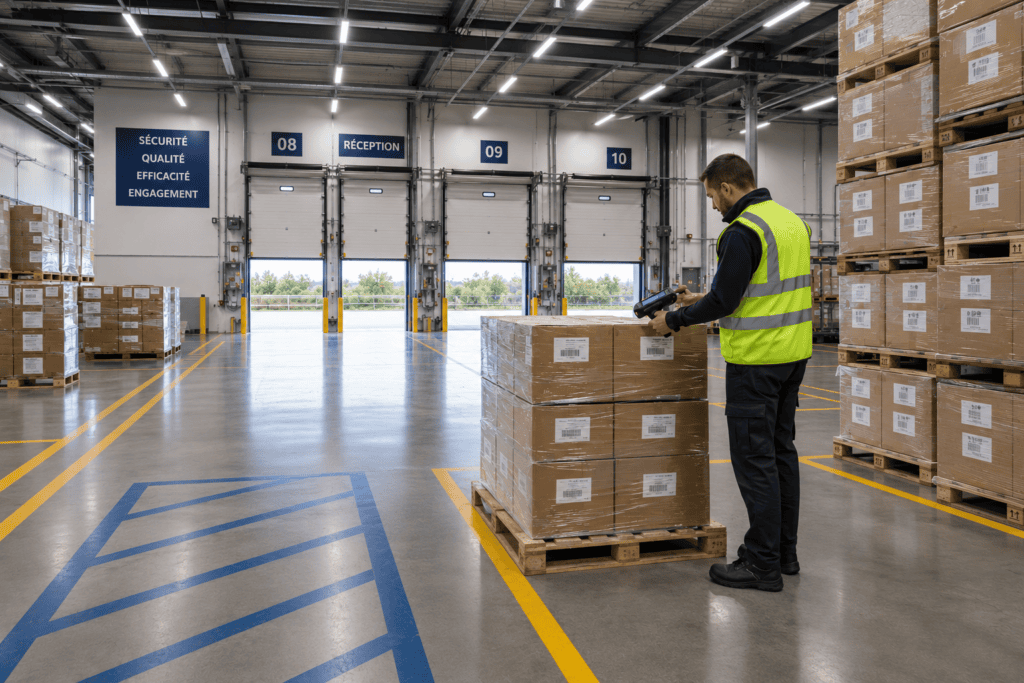
The same principle applies to logistics. A warehouse does not start operating when an order is picked. It starts much earlier, when the goods cross the receiving dock.
This is where the foundations are laid for reliable inventory, complete traceability, and products being available where warehouse operators expect to find them. Ultimately, it determines whether the entire operation can run smoothly.
That is why receiving should not be measured solely by the number of trucks unloaded each day. Its real success lies in leaving the warehouse ready for everything that comes next to run without friction.
Receiving does not end at the dock. It ends at the right location
In many warehouses, there is a tendency to think that receiving simply means unloading a truck, validating the inbound delivery and moving on to the next one. In reality, things are quite different.
A receiving process can only be considered complete once every item has been correctly identified, passed the necessary checks and been placed in the location where it actually belongs.
It may seem like a minor distinction, but it completely changes the way a warehouse is managed. Because receiving is not simply about putting stock into the system. It is about introducing reliable information.
From this first movement, everything that happens afterwards is built on it: available inventory, batch and expiry-date traceability, returns management, quality checks and the ability to locate a product within seconds.
If this first step goes wrong, the rest of the supply chain will be working with incorrect information.
Errors never stay in receiving
What is interesting about receiving is that its errors rarely show up at this stage. They appear hours later, when an operator goes looking for a product that the system says is available, but that is still waiting at the dock.
Or when an order leaves incomplete because the inventory records showed a different quantity from the actual stock. Or when a customer receives the wrong batch because traceability was not recorded correctly.
Even an apparently harmless decision, such as storing a fast-moving product in an unsuitable location, can have consequences for weeks.
Every picking operation will require more travel, picking times will increase and warehouse productivity will decline without any obvious cause.
That is why receiving is not an isolated process. It is the starting point for a significant part of a warehouse’s efficiency — or inefficiency.
When urgency replaces method
Every warehouse experiences periods of pressure. Several trucks arrive at once, orders keep coming in and the receiving area starts to fall behind.
This is precisely when one of the most common — and potentially most damaging — decisions tends to be made.
To save time, the inbound delivery is validated before the goods have been definitively put away. On paper, it seems like a good solution.
In practice, the WMS considers the products available and releases picking orders. Operators then start looking for goods that are still sitting next to the dock.
What started as a small delay in receiving ends up creating constant interruptions, blocked picking operations, calls between departments and delayed shipments.
It is the classic domino effect. Trying to solve a planning problem ends up creating a much bigger problem across the rest of the warehouse.
There is a rule in logistics that never loses its relevance: speed should never be confused with haste.
Solid processes make all the difference in receiving
It is no coincidence that receiving is one of the areas where the most operational experience is concentrated.
Every inbound delivery involves decisions that directly affect Procurement, Supply, Quality, Transport and Customer Service.
Teams need to validate discrepancies, manage returns, raise claims with suppliers, decide whether goods need to go through quality control and determine the most suitable location for each product.
The knowledge of the team remains essential.
But when everything depends solely on people’s experience, warehouse growth eventually reaches a limit. That is why more mature operations turn this knowledge into standardised processes supported by technology.
The power of digitalisation in decision-making
This is where a modern WMS stops being an administrative tool and becomes a genuine operational support system. With solutions such as IzyPro, receiving no longer depends solely on each operator’s memory or experience.
The system automates business rules, recommends the most suitable location based on product turnover or ABC criteria, starts traceability from the very first scan and ensures that every movement is recorded before the goods continue through the operation.
The goal is not simply to receive goods faster. It is to ensure that every decision made during receiving makes the rest of the warehouse easier to operate.
Because when inventory is reliable, picking flows smoothly. When traceability is accurate, incidents decrease. And when every product is where it should be, the entire operation becomes more productive.
Good receiving goes unnoticed. Its benefits do not
The best receiving processes are the ones nobody talks about.
Everything simply works: inventory matches, orders leave on time, teams work without interruptions and customers receive exactly what they expect.
At ACSEP, we have spent two decades helping companies optimise this process from two complementary perspectives: combining logistics consulting with technology. Because improving receiving is not simply about implementing a WMS. It is about reviewing the organisation, defining robust processes and using solutions such as IzyPro to make these best practices part of everyday operations.
Ultimately, warehouse efficiency does not begin when an order is picked. It starts much earlier: with the way every delivery is received.